
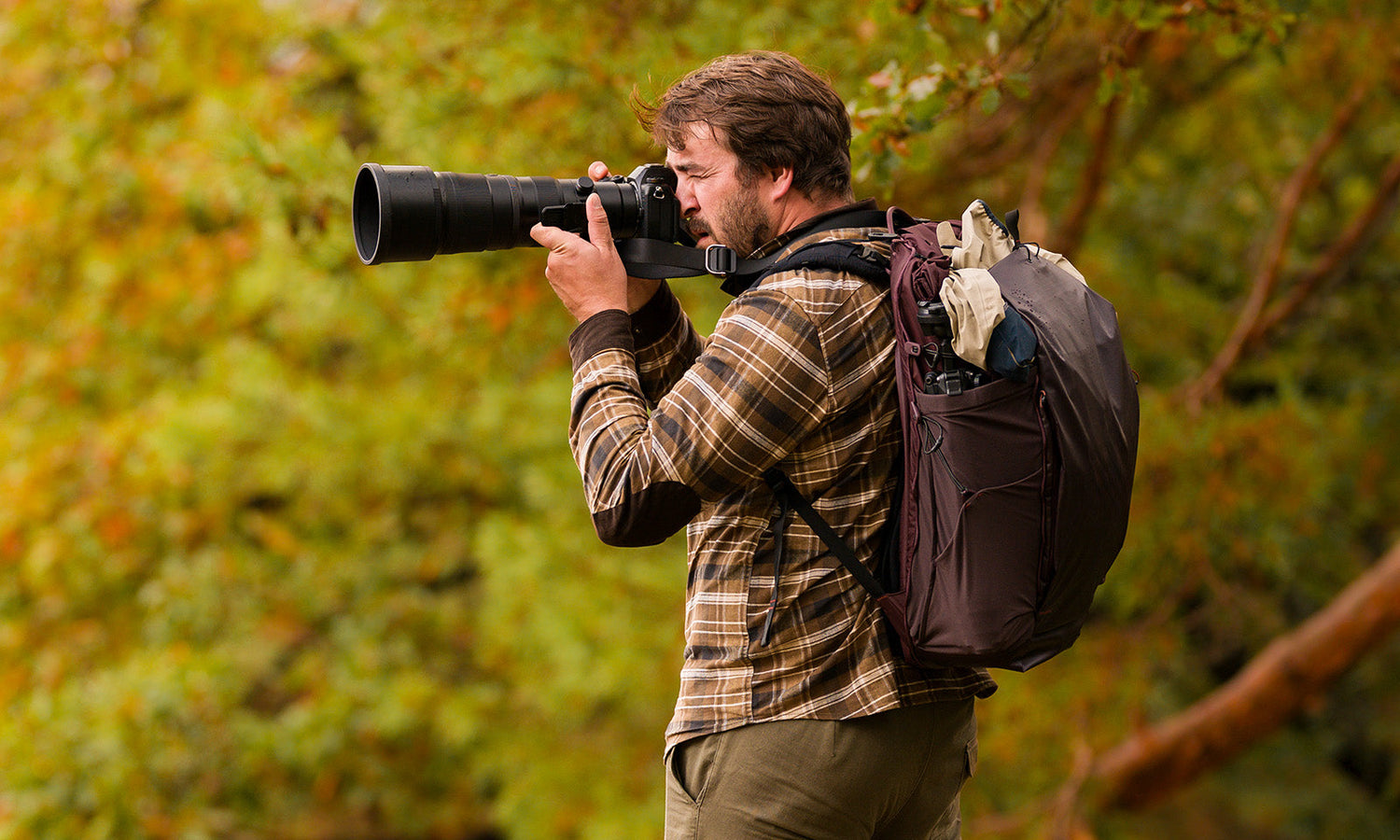
Photography is a physical pursuit. That might sound obvious, but it is something rarely talked about. The conversation tends to focus on gear, technique and creativity. The conversation about the effect of hauling heavy equipment, often for hours at a time, gets far less attention than it deserves.
The reality is that chronic pain and injury are genuinely common among photographers, and in many cases, the culprit is not an accident or a single moment of overexertion. It is the slow, cumulative effect of carrying a heavy camera the wrong way, day after day.
The Problem with How Most Photographers Carry Their Kit

The traditional camera strap has been around for decades, and, despite being familiar, it is not a particularly good solution for anyone shooting with a heavy body and lens combination.
Slung around the neck, a camera places direct, sustained pressure on the neck and shoulders. A modern full-frame camera body with a lens can weigh anywhere from one and a half to two and a half kilograms. That may not sound like much, but when that load is carried away from the body’s centre of gravity, over a long shoot, this can lead to:
- Neck pain and stiffness
- Pressure headaches
- Shoulder tension
- Poor posture
Shoulder straps improve things slightly by moving the weight to one side, but they introduce their own issues:
- One-sided shoulder pain
- Imbalance across the upper back
- Muscle tightness through the shoulder, neck and upper back
- Longer-term postural problems from repeated uneven weight bearing
Add a second body, a longer lens or a bag over the other shoulder, and the cumulative strain builds quickly.
A Better Way to Carry

The most effective solution: move the weight from the neck and shoulders to the hips, to the centre of gravity, where the body is far better equipped to carry load. This is the principle behind belt-mounted camera carrying systems, and it is where Spider Holster comes in.
Spider Holster's Camera Carry System v3 attaches to a belt worn around the waist and holds the camera at hip height, ready to draw and shoot in a single motion. This means:
- Strain is reduced across the neck, shoulders and upper back
- The body stays more balanced, even during long shoots
- The camera remains secure at the hip without swinging from the neck or shoulder
- Photographers can move more freely while keeping the camera ready to draw
- Comfort improves over the course of weddings, events and full-day shoots
Not Just for Professionals
Anyone who shoots regularly with a heavy camera stands to benefit:
- A landscape photographer who spends a full day on location
- An enthusiast who covers a family event
- A travel photographer walking city street for hours
These people are facing the same demands on their bodies as a professional, just less frequently. Your neck does not care whether you are being paid.
Looking After Your Longevity

Photography tends to be a long-term passion. Most people who get into it want to keep shooting for years, and the physical side of the craft is worth taking seriously if that is the goal. Neck and shoulder problems that are ignored early can become chronic, and chronic problems get in the way of the things you enjoy.
Carrying your camera differently is one of the simplest changes you can make, and unlike upgrading lenses or bodies, it is an investment that pays back in comfort and longevity rather than image quality. For photographers who spend serious time with a camera in hand, it is worth considering before the aches become something harder to ignore.

Leave a comment
All comments are moderated before being published.
This site is protected by hCaptcha and the hCaptcha Privacy Policy and Terms of Service apply.